- Posted on August 6, 2026
- By Jyoti Yadav
- In Living a Simple Life
₹40 Lakh Salary ($48,000 USD), Yet He Couldn’t Sleep: The Silent Modern Poverty Crisis Affecting White Collar Workers
A generation ago, poverty was usually associated with a lack of money, housing, or basic necessities. Today, a different kind of poverty is quietly affecting many successful professionals. They have good salaries, comfortable homes, modern conveniences, and promising careers, yet they feel exhausted, anxious, and emotionally empty.
This growing problem can be described as modern poverty—a condition in which financial success increases while emotional well-being declines.
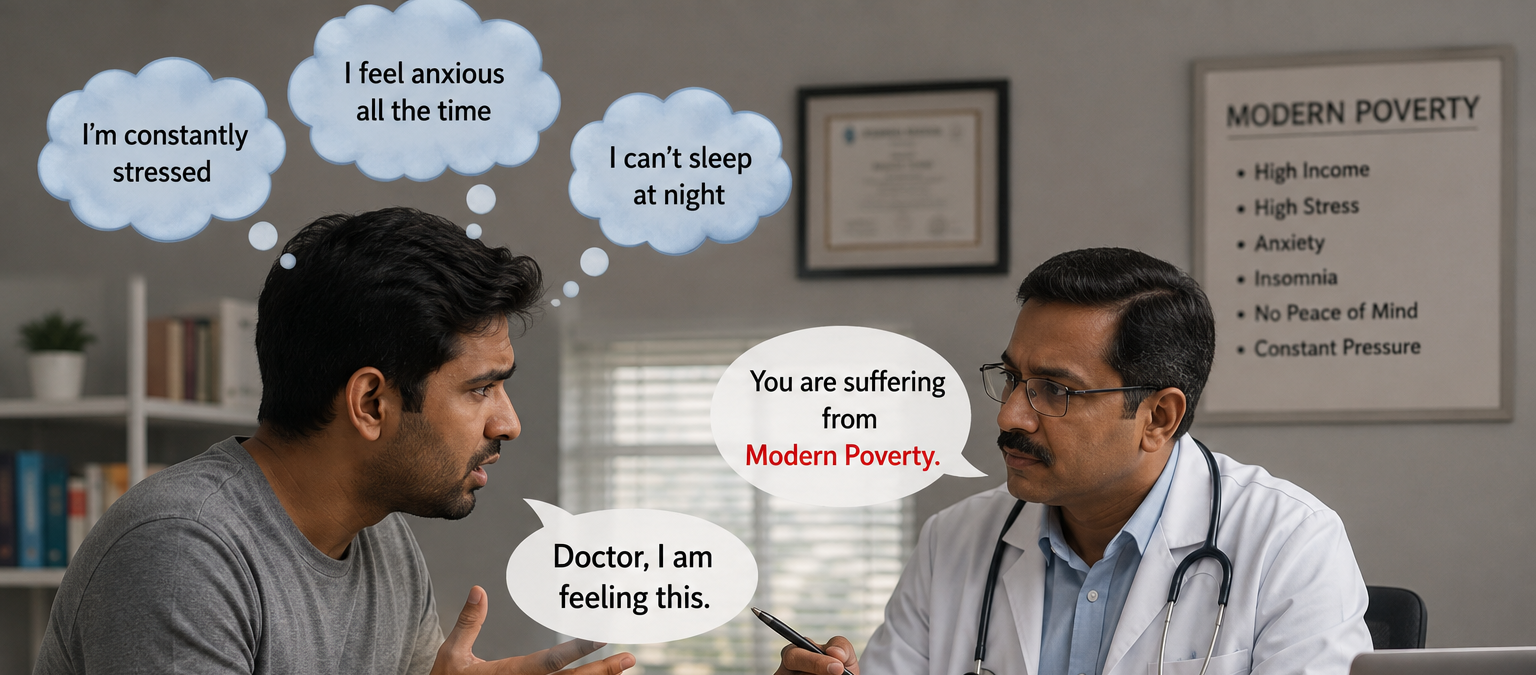
Recently, while scrolling social media, a case came in front of me which is shared by psychatrist Dr.goyal that perfectly illustrates this growing crisis among white collar workers.
A 34-year-old corporate professional visited him with complaints of insomnia, anxiety, restlessness, and difficulty focusing on his work. He explained that he felt constantly worried, unable to relax, and emotionally drained.
At first glance, there seemed to be no obvious reason for his distress.
He was earning nearly ₹40 lakh a year (approx. $48,000 USD). He owned a luxurious 2-BHK apartment, drove a BMW, and enjoyed a lifestyle that many people dream about. By society’s standards, he had already achieved success.
Yet he felt miserable.
When asked about the source of his stress, he explained that every achievement brought new expectations. The more he earned, the more people expected from him. The better he performed at work, the more deadlines appeared. The higher he climbed, the harder it became to keep up.
A 2-BHK apartment no longer felt enough because a larger home seemed like the next logical step. A luxury car no longer felt special because there was always a newer model to desire. A ₹40 lakh (approx. $48,000 USD) salary no longer felt impressive because others were earning more.
Despite having everything he once wanted, he never felt satisfied.
This is the essence of modern poverty.
The problem was not a lack of money. The problem was a lack of peace.
What Is Modern Poverty?
Modern poverty is not about lacking money. It is about lacking emotional security, contentment, and mindfulness.
A person may be financially successful while feeling emotionally exhausted.
Many white collar workers find themselves trapped in a cycle where every achievement immediately creates another goal. Instead of bringing satisfaction, success becomes another source of pressure.
As a result, they experience stress, anxiety, burnout, and a constant feeling that they are falling behind.
Why Financial Success No Longer Guarantees Happiness
Modern culture teaches us that happiness comes from earning more, owning more, and achieving more.
Unfortunately, satisfaction often does not grow at the same rate as income.
Psychologists call this the “hedonic treadmill”—the tendency to quickly adapt to improvements in our circumstances. What once felt exciting eventually becomes normal, and we begin chasing the next upgrade.
This is why many white collar workers continue to feel dissatisfied even after reaching goals they once considered life-changing.
The Hidden Cost of Constant Achievement
The case shared by Dr. Goyal highlights a reality that many professionals face.
Behind promotions, luxury homes, and impressive salaries often lies an invisible burden:
- Constant workplace pressure
- Fear of falling behind peers
- Endless performance expectations
- Lack of time for rest and recovery
- Chronic stress and anxiety
Over time, these pressures can affect both mental and physical health.
Persistent stress may contribute to poor sleep, fatigue, headaches, elevated blood pressure, and other health concerns.
The irony is that people often sacrifice their well-being in pursuit of a lifestyle they rarely have time to enjoy.
Emotional Wealth Matters Too
Dr. Goyal made an important observation: earning money and being emotionally secure are no longer the same thing.
Many people spend years building financial wealth while neglecting emotional wealth.
Emotional wealth includes:
- Peace of mind
- Good health
- Meaningful relationships
- Time freedom
- Gratitude
- Purpose and fulfillment
Without these things, financial success can feel surprisingly empty.
How Comparison Fuels Modern Poverty
One reason modern poverty is becoming more common is comparison.
In today’s connected world, there is always someone with a bigger home, a higher salary, a more prestigious title, or a more luxurious lifestyle.
As comparison increases, contentment decreases.
The result is a never-ending race where success always seems just out of reach.
What Simple Living Can Teach White Collar Workers
Simple living offers an alternative path.
It does not mean giving up ambition or refusing financial growth.
Instead, it means being intentional about what truly improves your life.
Simple living encourages people to focus on:
- Enough instead of endless more
- Meaning instead of status
- Health instead of hustle
- Contentment instead of comparison
For many white collar workers, this mindset can reduce stress and create a healthier relationship with success.
Final Thoughts
The story shared by Dr.Goyal is not unique. It reflects a growing reality among modern professionals.
Many white collar workers are richer than ever before, yet they feel more anxious, exhausted, and emotionally disconnected than previous generations.
The lesson is clear: financial success and emotional success must grow together.
A larger salary, a bigger house, or a luxury car can improve comfort, but they cannot replace peace of mind.
True wealth is not measured only by what you own. It is also measured by how peacefully you live.
Frequently Asked Questions
1. Why do I feel stressed even though I have a good job and salary?
Many professionals experience stress despite financial success because income does not automatically create peace of mind. High expectations, workplace pressure, long hours, and constant comparison can leave people feeling exhausted even when they are earning well.
2. Why am I unhappy even after achieving my career goals?
Achieving a goal often provides only temporary satisfaction. Once a milestone is reached, many people immediately focus on the next promotion, salary increase, or achievement, creating a cycle where success never feels enough.
3. Why do successful people struggle with anxiety?
Success often comes with greater responsibility, higher expectations, and fear of losing what has been achieved. These pressures can contribute to anxiety, sleep problems, and emotional exhaustion.
4. Can a high-paying job affect mental health?
Yes. While a good income can improve financial security, high-pressure jobs can also increase stress, burnout, anxiety, and work-life imbalance if healthy boundaries are not maintained.
5. Why do I always feel behind even though I’m doing well financially?
Social media and workplace comparison can make people focus on what others have rather than what they have achieved themselves. This creates a feeling of constantly falling behind, regardless of actual success.
6. Is it normal to feel empty after getting a promotion or salary increase?
Yes. Many people experience this because external achievements cannot fully satisfy emotional needs such as purpose, meaningful relationships, rest, and personal fulfillment.
7. How do I stop comparing myself to other successful people?
Start by limiting comparison triggers, practicing gratitude, and focusing on your own values and goals. Measuring success against your previous self instead of others can also improve contentment.
8. What are the signs that I am experiencing burnout or modern poverty?
Common signs include insomnia, constant stress, difficulty relaxing, irritability, anxiety, lack of motivation, emotional exhaustion, and feeling dissatisfied despite financial success.
9. How can I enjoy success without constantly chasing more?
Define what “enough” means for you personally. Focus on health, relationships, free time, and emotional well-being alongside financial goals rather than treating income as the only measure of success.
10. Can simple living help reduce stress for corporate employees?
Yes. Simple living encourages people to focus on what truly matters, reduce unnecessary pressure, limit comparison, and create a healthier balance between achievement and well-being. Many professionals find that this approach helps them feel calmer and more satisfied with life.