The One Money Question That Keeps Confusing People
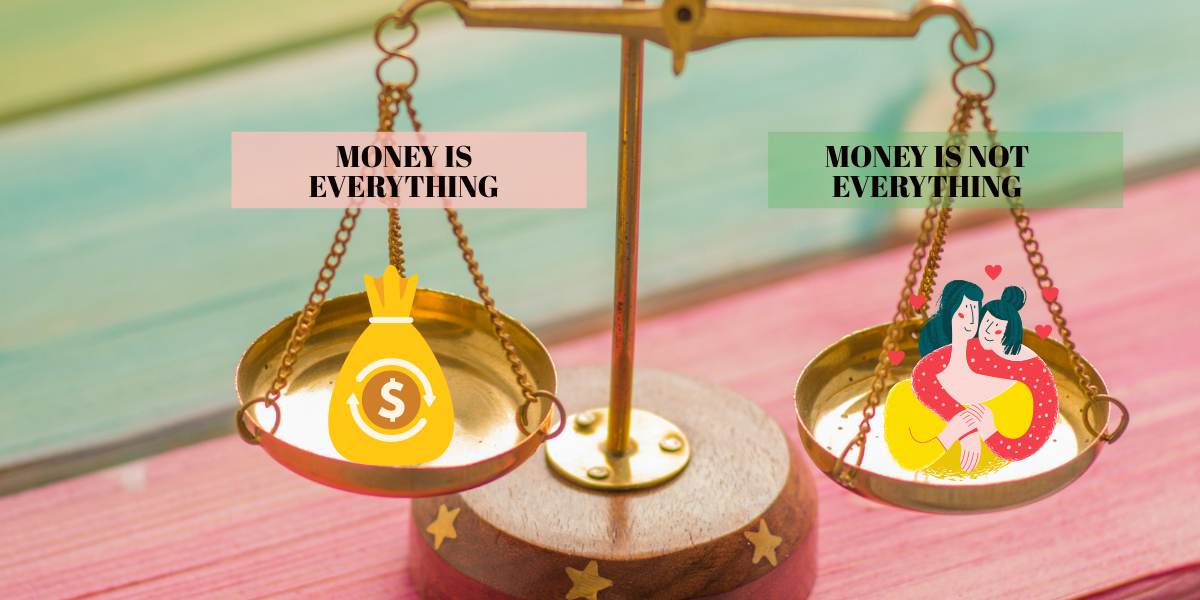
Money Is Everything… Or Money Is Not Everything?
Recently, I was researching the phrase “money is everything.” As I read different articles, I came across completely different opinions about money.
Some people said: “Money is everything.” Others argued: “Money is not everything.”
What struck me was that very few articles tried to help readers understand how both statements can be true at the same time — just at different moments of life.
I always try to bring a fresh perspective to my articles so that readers can connect with something real rather than simply repeating common ideas. Personally, I believe less in bookish definitions and more in real-life experience, because reality is reality. So let’s walk through both sides of this idea, one at a time, and see where they actually meet.
View One: Money Is Everything
“Money is everything” is the universal thought — the one almost everyone has heard or said at some point. But according to me, I’d put it a little differently: money buys everything.
I would never say that money itself is everything — but it buys almost everything we need for survival and comfort.
Without money, it becomes extremely difficult to survive. The three basic necessities of life — food, clothing, and shelter — are, in most cases, obtained through money. We need it to buy the things we need, and many of the things we want.
When People Are Forced to Say “Money Is Everything”
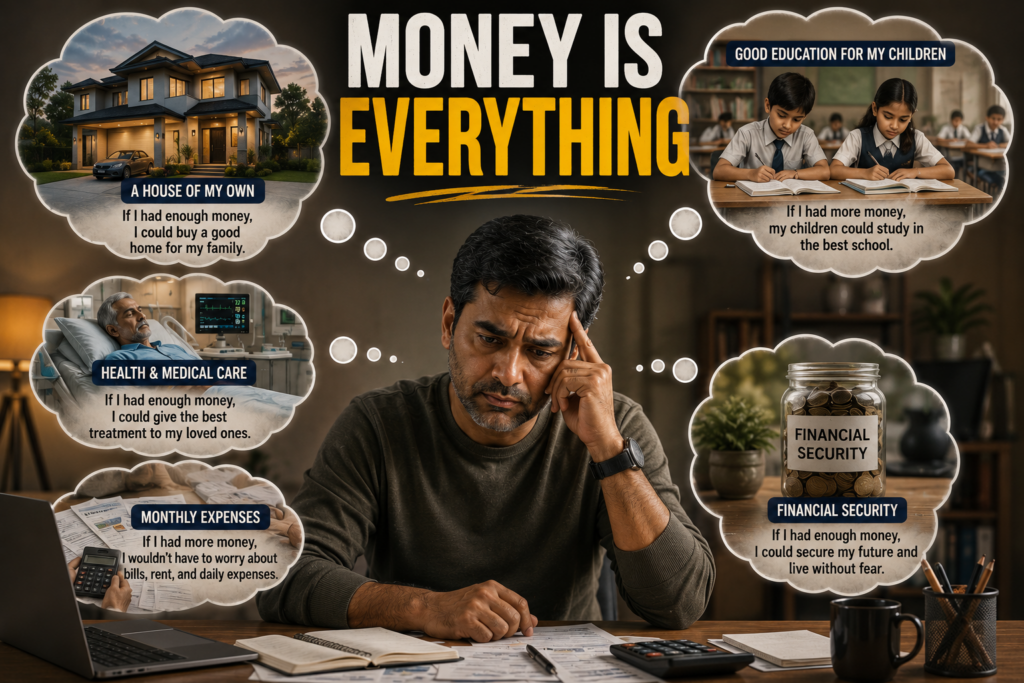
This belief doesn’t come from greed. It comes from real, painful situations — the kind where money stops being a “nice to have” and becomes the only thing standing between a person and disaster:
- When a family cannot afford a hospital bill while a loved one is seriously ill.
- When parents can’t save enough for their child’s education.
- When someone fears losing their home because they can’t pay the rent.
- When rising housing prices make a dream home feel impossible.
- When financial stress steals sleep and creates constant anxiety.
Concerns about debt, housing costs, healthcare, and education are among the most common sources of anxiety for adults, and they can affect sleep, relationships, and overall well-being.
In these situations, people aren’t really searching for money itself. They’re searching for what money provides: security, comfort, freedom, peace of mind. That’s why money feels like the most important thing in the world during hard times — because right then, it genuinely is the thing standing between a person and their basic needs.
But There’s a Catch: The Hedonic Treadmill
Here’s where it gets interesting. Even when people do get more money, satisfaction doesn’t always follow — because of something psychologists call the hedonic treadmill.
The idea is simple: after buying something new — a car, a phone, even a house — the excitement fades over time. We adapt to our new circumstances and quietly start wanting the next thing. This is part of why earning more money doesn’t always create lasting satisfaction.
Which raises an important question: how long is your “everything” list?
If your desires keep growing faster than your income, no amount of money will ever feel like enough. There will always be another thing to buy, another goal to chase, another possession to own. In that sense, “money is everything” can become a trap — not because money is bad, but because the list of wants never ends on its own.
So while money genuinely solves survival-level problems, it’s worth noticing when the goalpost is quietly moving.
View Two: Money Is Not Everything

“Money is not everything” — this too is a thought most people already agree with. But according to me, this idea can be explained in one simple sentence: money is not an emotion.
Money can buy expensive clothes, luxury cars, beautiful homes, comfortable vacations. It can make us look successful and prosperous from the outside. But deep inside, a person can still feel lonely, disconnected, or unhappy — despite having plenty of money. That’s because money is not an emotion, and some things simply aren’t for sale.
When People Realize Money Has Limits
Just as there are situations that scream “money is everything,” there are others that quietly prove the opposite:
- When someone has wealth but nobody who truly listens to them.
- When a person spends years earning money but loses emotional connection with their children.
- When a large house is full of things but empty of love and warmth.
- When someone can afford expensive vacations but still feels hollow inside.
- When trust is broken in a relationship and no amount of money can repair it.
- When a loved one passes away, and all the money in the world can’t bring them back.
Money can buy convenience, comfort, gifts, and can pay the bills. But money cannot buy genuine love, cannot create meaningful relationships, cannot restore broken trust, cannot guarantee perfect health, and cannot bring back lost time.
Money can buy a house, but not a loving home. It can buy gifts, but not genuine affection. It can pay medical bills, but not perfect health. That’s the whole idea in one line: money is not everything, because money is not an emotion.
What Research Says About Money and Happiness
This isn’t just a nice sentiment — it’s backed by data, and the story is more layered than most people assume.
A well-known 2010 study by Nobel laureates Daniel Kahneman and Angus Deaton found that day-to-day happiness rose with income, but flattened out around $75,000 a year — after that, more income didn’t seem to move the happiness needle.
More recent research has refined this picture rather than overturning it. A later collaboration between Kahneman, researcher Matthew Killingsworth, and Barbara Mellers found that for most people, happiness keeps rising steadily as income grows, while for a less-happy minority, it rises only up to a certain point before leveling off. In other words, once basic needs and a reasonable cushion are covered, the rate at which more money adds to happiness slows down dramatically for most people — and for some, it stops mattering almost entirely.
This lines up with something else research consistently shows: strong relationships are closely tied to higher life satisfaction. It may explain why people with modest incomes sometimes report being happier than people with far more money but weaker connections. Money can support a good life — but emotional fulfillment tends to come from relationships, purpose, and human connection, not from the bank balance alone.
So, What Is the Truth?
Both statements are partially true — they just apply to different stages of the same journey.
- When basic needs aren’t being met, it genuinely feels like money is everything.
- Once those needs are fulfilled, most people start to realize money is not everything.
Maybe the most accurate way to say it is this: money buys many things that make life easier, but it can’t buy the emotions that make life meaningful.
The Real Purpose of Money
The real purpose of money was never to become the center of our lives. Money is a tool — it helps us meet our needs, gain security, create opportunities, support the people we care about, and improve our quality of life.
Problems begin when we expect money to provide things it was never designed to provide: love, purpose, belonging, inner peace. Money works best when it serves our life — not when our life serves money.
How Do We Create Balance?
At this point, both perspectives make sense — but the natural next question is: how do we actually create balance between the two?
Some people have very little money but endless desires. Others have plenty of money but struggle with loneliness, stress, poor health, or superficial relationships. In my experience, one approach helps with both situations: simple, intentional living.
If you have limited resources but constant desires — a minimalist lifestyle can help you see clearly where your money goes and what genuinely adds value to your life, instead of chasing every new want as it appears. If this feels difficult to start, you may find guidance in my article Changes I Felt After Adopting a Minimalist Lifestyle.
If you have financial abundance but little peace — simple living can help you reconnect with what money can’t buy. That might mean spending time in nature, building meaningful relationships, staying close to loved ones, and choosing experiences over possessions. You may also enjoy reading How Living a Simple Life Changed My Life.
A Powerful Reflection
Try this thought experiment: imagine you received unlimited money tomorrow. Then ask yourself two questions —
- Which problems in your life would disappear immediately?
- Which problems would still remain?
The answer usually reveals the real dividing line — between the problems that money can solve, and the ones that need emotional growth, relationships, or personal change instead.
Final Thoughts
Money is important because it helps meet our needs. But it becomes dangerous the moment we expect it to provide everything — including happiness, love, and meaning.
The day we start using money as a tool — to meet our needs and create happiness for ourselves and the people we love — is the day we stop being trapped by it. And perhaps that’s exactly when we begin living a healthier, happier, more meaningful life.
Frequently Asked Questions (FAQ)
Why do people say money is everything?
People often say this during times of financial stress, because money directly affects survival, security, healthcare, education, and daily living.
Is money more important than happiness?
Money can reduce financial stress and improve comfort, but happiness is also shaped by relationships, health, purpose, and emotional well-being.
Can money buy happiness?
Money can buy comfort, convenience, and experiences that contribute to happiness. But it cannot directly buy genuine love, inner peace, or meaningful relationships.
Why do wealthy people still feel unhappy? Wealth can solve financial problems, but it doesn’t automatically provide meaning, belonging, strong relationships, or emotional fulfillment.
At what point is money enough? “
Enough” varies from person to person — it depends on lifestyle, responsibilities, goals, and personal values, not a fixed income number.
What is the biggest misconception about money?
That money solves every problem. It solves many practical challenges, but emotional and relationship-related challenges usually need different solutions entirely.
What is the relationship between money and simple living?
Simple living helps people focus on what truly matters instead of constantly chasing more possessions, encouraging mindful spending and greater contentment.
How can minimalism help with financial stress?
It encourages intentional spending, cuts unnecessary expenses, and helps people prioritize needs over wants — which can improve both financial stability and peace of mind.
What is the real purpose of money?
To help people meet their needs, gain security, create opportunities, and support the life they want to live. Money is a tool — not the ultimate goal of life.