How to Simplify Your Life in the Artificial World
By a fellow human, trying to stay human.
We live in a society that never stops.
Generations have come and gone, yet many of our struggles remain the same. People worried about money a hundred years ago, and they worry about money today. Relationships have always been complicated. Raising children has never been easy.
But while these problems remain, they have quietly changed their shape.
The world of 2026 looks very different from the world our parents grew up in. Everything has gone digital. Artificial intelligence has walked into our homes, our workplaces, and sometimes, even into our loneliest hours. Women have become more educated, more independent, and more financially powerful than any previous generation. Technology has made life easier in countless ways.
These changes carry real beauty.
But every convenience also carries a hidden cost.
And sometimes, the very things designed to make our lives easier are also the things quietly unraveling them.
Today I want to sit with you and talk about some of these modern struggles — the ones that don’t make headlines but live quietly inside ordinary people’s hearts. You may agree with some of what I say. You may not. But perhaps somewhere in these words, you will recognize a corner of your own life.
The Life of Appearances
Modern city life has slowly become a quiet competition.
Who has the newest phone? Who drives the better car? Who looks younger? Who has the perfect body? Who is living the most beautiful life?
Social media has transformed everyday existence into a performance. And most of us are exhausted from performing.
Here is what nobody tells you: that ₹70,000 iPhone may not be a sign of wealth. It may simply be the sign of an EMI running quietly in the background.
Those long, beautiful locks may not be natural. Hair extensions have become ordinary.
That perfect body may not come from discipline alone. Cosmetic procedures and surgeries have become so normalized that we forget to question whether we ever needed them.
That perfect photograph? It may not even be real. Filters can rebuild a face entirely.
The problem is not that these things exist. Human beings have always wanted to look beautiful and live well. There is no shame in that.
The real problem is what happens inside us when we begin comparing our actual, imperfect, behind-the-scenes life to someone else’s carefully edited highlight reel. Research shows that passive social media use significantly increases upward social comparison and is directly linked to lower life satisfaction.
That comparison creates pressure. Pressure pushes us to spend. Spending pushes us into debt. And debt turns into a kind of invisible weight that follows us into every room we enter. Studies on digital retail behaviour confirm that the ease of online shopping significantly increases impulse spending and post-purchase regret.
How to simplify this part of life: Before buying something expensive, pause and ask yourself honestly — does this purchase improve my life, or does it improve my image? Focus on building financial peace, not social approval. Looking rich and being financially free are not the same thing. They rarely are.
Women’s Independence: A Blessing With New Challenges
The modern world has opened doors for women that previous generations could not have even imagined.
Women today are building careers, running businesses, raising families, earning their own money, and living on their own terms. This is not just progress. This is a revolution that deserves to be celebrated.
And yet.
Many women today find themselves quietly carrying two full-time lives simultaneously. They are expected to succeed at work while also managing the home, the children, the emotional weight of relationships, and the expectations of family.
Many women are not just working outside the home. They are working two full shifts. One at the office. One at home. And one more, unspoken and uncounted — the shift of managing everyone else’s feelings.
Sources confirms that women globally still perform two to three times more unpaid care work than men — even when they hold full-time professional roles.
The result is burnout, exhaustion, and a deep sense of invisible labour that has become part of many women’s daily lives.
How to simplify this part of life: You do not need to be perfect at everything. Share responsibilities wherever possible. Allow yourself to receive help without guilt. And give yourself permission to rest — not as a reward, but as a right.
The Rise of AI and the Quiet Decline of Thinking
Artificial intelligence is everywhere now, and I say this not to alarm you, but to ask you to pause and think about what that means for us.
Students complete entire assignments without doing any real research. Employees generate reports they did not write. People outsource decisions they once would have wrestled with. Some people even turn to AI for emotional support during their loneliest moments.
AI has made many things easier. And easier is not always worse.
But there is something quietly slipping away.
Research on cognitive offloading — the practice of relying on external tools for memory and problem-solving — suggests that over-dependence on technology can reduce our capacity for independent recall and analytical thinking over time.
When we stop solving small problems ourselves, we lose the muscle for solving large ones. Technology is growing smarter by the day. But are we growing wiser alongside it?
How to simplify this part of life: Use AI as a tool — a remarkable one — but not as a replacement for your own mind. Solve small problems yourself before reaching for a prompt. Discuss ideas with real people. And encourage children to develop the beautiful frustration of figuring things out on their own.
When the Screen Becomes Our Closest Companion
Something strange has happened without most of us noticing.
Many people today have hundreds of contacts but very few people they can truly call at midnight. They have followers but not friends. They have audiences but not witnesses — people who know their actual life, not just their curated version of it.
We live in the most connected era in human history. And yet loneliness has become one of its defining conditions.
Human beings are not built for connection through a screen alone. We need to share meals. We need to sit together in silence. We need someone who notices when something is wrong before we say a word.
No machine, however sophisticated, can fully replace the warmth of genuine human presence.
How to simplify this part of life: Make time for face-to-face conversations. Put the phone down during meals. Call someone instead of texting. Use technology to strengthen your relationships, not to quietly replace them.
The Meaning of Love Has Changed

Love itself has shifted in ways that would have been unimaginable to our grandparents.
Relationships today are more open and far less scripted than those of earlier generations. Live-in arrangements have become common. Marriage is happening later, or sometimes not at all. Many people are choosing not to have children. Public expressions of affection that once made people uncomfortable are now largely unremarkable.
The modern world offers more freedom in love than any previous era.
But freedom is not the same as ease. And choice is not the same as clarity.
The question is not whether these changes are right or wrong. The real question is whether, amidst all this freedom, people are building relationships that are stable, honest, and deeply sustaining.
How to simplify this part of life: Choose emotional maturity over romantic excitement alone. Choose partners based on shared values, not only chemistry. Invest in communication — the boring, glamorous, necessary kind. Strong relationships have always required effort. That part has not changed.
Convenience Is Quietly Making Us Weaker
Life has become extraordinarily convenient.
Food arrives at the door within thirty minutes. Domestic help can be booked through an app. Almost every physical task can be handed to someone else, or to an algorithm.
But this convenience removes something too.
When we stop cooking, we lose our relationship with nourishment. When we stop walking, we lose our relationship with our own bodies. And then, having traded away all that movement, we spend money trying to regain our health at a gym or a clinic.
The World Health Organization identifies physical inactivity as one of the leading risk factors for global mortality — and notes that sedentary, convenience-driven lifestyles have increased significantly in recent years. (WHO, Global Action Plan on Physical Activity, 2018–2030)
We save time through convenience and then spend money trying to recover what we traded away.
How to simplify this part of life: Cook a simple meal when you can. Walk when walking is possible. View movement as a natural part of life rather than something that requires a special time and place.
When Everything Is Available and Nothing Is Enough
Today, almost everything is available online.
Food. Clothes. Courses. Entertainment. Products. Relationships. Opinions. Outrage. Comfort. Distraction.
This is genuinely wonderful. And it is also genuinely exhausting.
Every hour of every day, something is trying to get our attention — telling us we need more, that we are missing out. The result is often a cluttered home, a cluttered mind, and a persistent feeling of not quite having enough, despite having more than most people in human history ever did.
How to simplify this part of life: Try the 48-hour rule before any non-essential purchase. Unsubscribe from promotional emails that exist only to manufacture desire. Buy fewer things, but choose them more carefully. Learn the difference between a real need and a passing feeling dressed up as one.
The Real Problem of 2026
The biggest challenge of modern life is not technology itself.
It is artificiality.
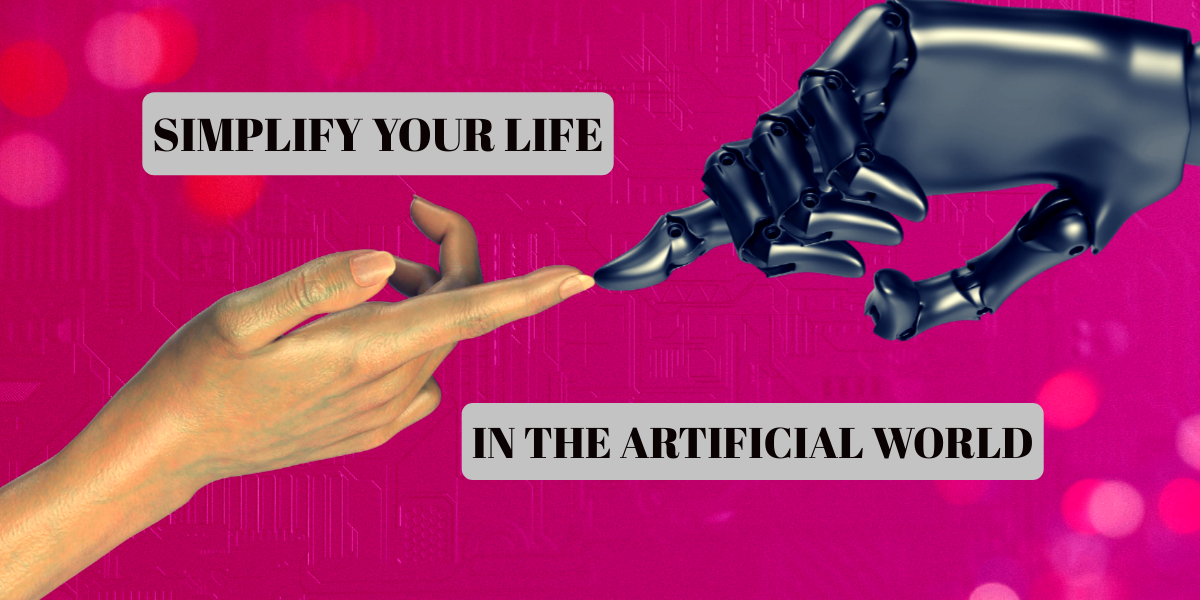
Artificial beauty. Artificial success. Artificial relationships. Artificial intelligence growing smarter as we grow more dependent.
The path to a simpler life is not about rejecting technology. It is about remaining human while using it.
Use technology — but do not let it think for you. Enjoy convenience — but do not lose your strength to it. Earn money — but do not sacrifice your peace for appearances.
In a world growing increasingly artificial, your genuine, imperfect humanity may be the greatest thing you have left to offer.
Frequently Asked Questions
Q: How do I simplify my life when everything feels overwhelming? Start with one small thing. Not a lifestyle overhaul — just one decision this week that reflects what actually matters to you. Simplicity builds from small, honest choices.
Q: Is AI making our lives better or worse? Both. AI saves time and opens access to remarkable tools. But when it replaces thinking rather than supporting it, it quietly hollows out our capacity to sit with problems, feel discomfort, and grow. Use it with intention.
Q: Why do people feel lonely even though they are more connected than ever? Because connection and presence are not the same thing. Digital contact is fast but often shallow. Loneliness today is rarely about access to people — it is about depth of contact.
Q: How can women simplify life without giving up ambition? The goal is not to do less — it is to carry less guilt. Sharing responsibilities and letting go of perfection in every role are not signs of weakness. They are signs of wisdom.
Q: What is the most practical first step to simplify your life in 2026? Audit your attention. For one week, honestly notice where your time and mental energy actually go. Most people find that much of it is spent on comparisons and obligations they never consciously chose.