- Posted on April 16, 2026
- By Jyoti Yadav
- In Living a Simple Life
How to Stop Buying Clothes from Social Media: 10 Reasons I Quit
Let me be honest with you from the very first line: I am a woman who loves clothes. I am not someone who never cared. I am not someone who finds shopping boring. I am someone who genuinely enjoyed the thrill of discovering a new kurta, a beautiful printed dupatta, or a well-cut top at a great price.
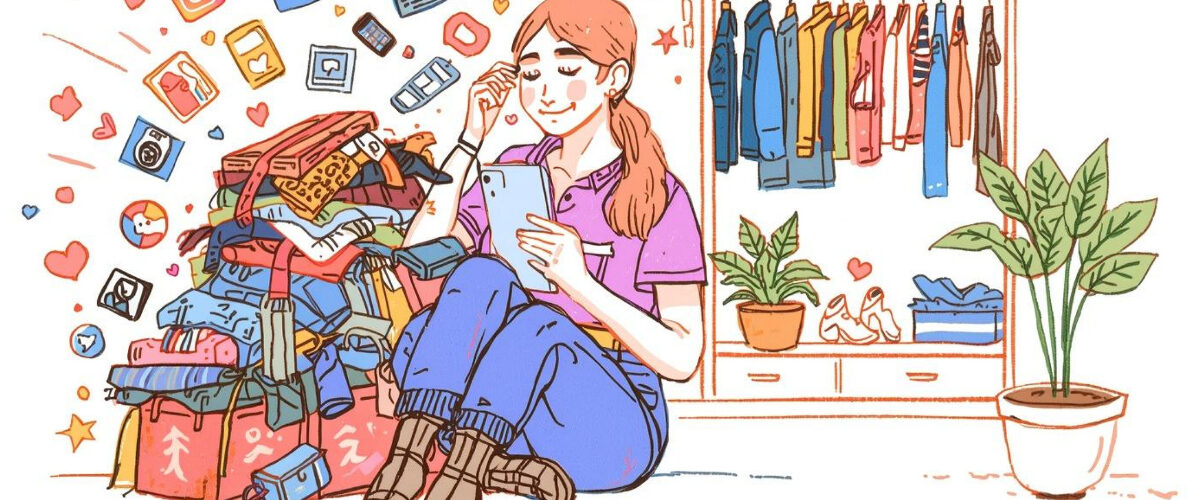
And yet, a few years ago, I found myself standing in front of a wardrobe so full it was almost impossible to close — and feeling completely overwhelmed. Not happy. Not stylish. Overwhelmed.
The clothes I had bought on impulse stared back at me. Most still had tags. Many I had forgotten I even owned. And somewhere in between the rush of buying and the guilt of not wearing, I had lost sight of something important: I was spending money I worked hard to earn on things that were not making my life better.
That was the beginning of my minimalist journey — and this article is everything I learned along the way about how to stop buying clothes you don’t actually need, without feeling deprived, sad, or like you’re giving up on style.
“The problem was never that I loved clothes. The problem was that I was shopping from a place of impulse, emotion, and outside pressure — not from a place of genuine need or joy.”
Why Do We Keep Buying Clothes We Don’t Need?
Before we talk about how to stop, we have to understand why it happens in the first place. Because willpower alone is never going to be enough if you don’t address the root cause.
Research in consumer psychology tells us that shopping for clothes is rarely just about clothes. Our emotions are often the ones calling the shots. When we feel bored, stressed, lonely, or a little low on confidence, our brain reaches for a quick fix — and a shiny new outfit is one of the easiest dopamine hits available. We now buy 60% more clothes than we did in the year 2000, but we wear each piece fewer than seven times before it’s discarded. That number tells the whole story.
Social media has made this dramatically worse. Platforms are flooded with new trends every single week. Influencers post outfits that make ordinary life look extraordinary. Limited-time offers create artificial urgency. Our brains — wired to fear missing out — respond exactly the way brands intend them to.
But here is what I want you to take away from this section: it is not a character flaw. It is a system that is designed, very deliberately, to make you buy. Recognising that was the most freeing moment of my entire minimalist journey.
Ask yourself honestly
The next time you feel the urge to shop, pause and ask: Am I bored? Stressed? Feeling a little low today? If the answer is yes to any of those — put the phone down. The outfit can wait. The feeling cannot be solved by a purchase.
1 I Audited My Wardrobe — And the Numbers Shocked Me
The first real step in my journey was doing a full wardrobe audit. I laid everything out. Everything. And I counted items I had never worn, items I had worn once, and items I reached for again and again. The ratio was alarming.
Then I did something even harder: I added up what I had spent on those unworn clothes over the past year. Not estimated — actually added up, from bank statements. The total was enough for a holiday. A skill course. An emergency fund. Seeing the real number made something shift in my brain permanently.
Action step
Do your own wardrobe audit this weekend. Pull everything out, sort into “wear often,” “wear rarely,” and “never worn.” Then ask yourself: what do the clothes I actually reach for have in common? That is your real style. Shop from that knowledge, not from trends.
2 I Identified My Personal Shopping Triggers
Once I understood that emotions drive impulsive purchases, I started tracking mine specifically. I noticed I was most likely to scroll through shopping apps late at night when I was tired, or on weekday afternoons when work felt monotonous. I shopped when I was celebrating something. I also shopped when I was sad. Shopping had become my default emotional response to almost everything.
The moment you identify your specific triggers, you can start building different responses to them. A walk, a call to a friend, a cup of tea, a journal entry — anything that addresses the actual feeling instead of masking it with a purchase.
3 I Stopped Confusing Admiration With Want
This one took me a long time to understand. I would see a beautiful outfit on someone — on the street, on a friend, in a magazine — and immediately feel like I needed it. But there is a crucial difference between admiring something and actually wanting it for yourself.
I admired a lot of bold, maximalist fashion. Bold colours, dramatic silhouettes, statement pieces. But when I was honest with myself, I never actually reached for those things in my own wardrobe. My real style was quiet, comfortable, and understated. Learning to separate what I admired from what I would genuinely wear saved me from hundreds of wrong purchases.
4 I Introduced a Waiting Rule — And It Changed Everything
The single most practical technique I adopted was a simple waiting period before any purchase. If I felt the urge to buy something, I would add it to a list — not a cart — and wait. Sometimes 48 hours. Sometimes 30 days for bigger items.
The result? Most of those items simply stopped feeling necessary after a short wait. The urgency faded. The craving dissolved. And for the rare items that I still genuinely wanted after the waiting period, the purchase felt considered and right rather than impulsive and guilty.
The three-question test
Before buying anything, ask:
- Will I wear this today or this week?
- Does it work with at least three things I already own?
- Am I in love with the item — or just the price?
If you can’t answer yes to all three, it stays on the shelf.
5 I Curated a Small Wardrobe I Actually Love
Minimalism does not mean wearing the same grey t-shirt every day. It means building a small, intentional collection of pieces that you genuinely love, that all work well together, and that reflect who you actually are — not who a trend told you to be.
I started investing in fewer, better pieces. Quality over quantity, always. A well-made kurta that I reach for every week gives me far more value — financial and emotional — than ten fast-fashion pieces I wore once. When your wardrobe is small and curated, getting dressed in the morning becomes a pleasure instead of a source of anxiety.
6 I Learnt to Shop My Own Wardrobe First
Before I consider buying anything new, I now do a full tour of what I already own. I restyle old pieces. I pair things differently. I rediscover items I had pushed to the back. This is not a deprivation practice — it is genuinely one of the most creative and satisfying parts of my relationship with clothes now. You own more than you think. You just have to actually look.
7 I Set a Conscious Clothing Budget
Rather than trying to never buy clothes — which is unrealistic and unnecessary — I created a monthly clothes budget that I actually stick to. This is not a punishment. It is a boundary. When you know you have a specific amount to spend in a month, you become far more selective and intentional. Every purchase becomes a choice, not a reflex.
8 I Unfollowed What Was Fuelling the Urge
I went through my social media and unfollowed every account that consistently made me feel like I was lacking something — whether that was a certain body, a certain lifestyle, or a certain wardrobe. It sounds dramatic. But within weeks, the background noise of wanting quietened considerably. What you don’t see, you don’t covet. Curating your feed is one of the most underrated acts of financial self-care available to you.
9 I Found My “Why” and Kept It Visible
My reason for wanting to stop buying clothes I didn’t need was not just financial, though that mattered. It was about mental space, clarity, and peace. I was tired of the guilt cycle — the rush of buying followed by the hollow feeling when the parcel arrived and the item was already less exciting than it had seemed. I was tired of a cluttered wardrobe making me feel cluttered inside.
Finding your real “why” — and keeping it somewhere visible — is what sustains the change when temptation is strong. Write it down. Stick it somewhere you’ll see it when you’re about to open a shopping app.
10 I Accepted That Progress, Not Perfection, Is the Goal
I still make impulsive purchases sometimes. I am not a shopping saint. But the difference between who I was three years ago and who I am today is significant — in my bank account, in my wardrobe, and in my sense of peace around clothes. The goal was never perfection. The goal was awareness, intention, and a life where my spending reflects my actual values. I am getting there, steadily.
Because buying clothes is rarely just about clothes. Consumer psychology research shows that we shop most often to regulate emotions — boredom, stress, loneliness, low confidence. Your wardrobe is full but the emotional need that shopping was meeting is still there. Once you identify your specific trigger (late-night scrolling? post-work exhaustion? a hard day?), you can start replacing the habit with something that actually addresses the feeling.
Your quick-start action plan
- Do a wardrobe audit — lay everything out and note what you actually wear
- Add up what you spent on unused clothes in the last 12 months (be honest)
- Identify your top two emotional shopping triggers
- Install a 48-hour waiting rule before any purchase
- Unfollow accounts that make you feel like you need to buy something
- Set a realistic monthly clothing budget and stick to it
- Before buying new, shop your own wardrobe first
- Write down your “why” and keep it visible
You do not have to stop loving clothes. You just have to stop letting the act of buying them substitute for the things you actually need — rest, connection, confidence, peace. Those things are not sold anywhere. But they are absolutely available to you, every single day, for free.