- Posted on July 3, 2026
- By Jyoti Yadav
- In Minimalist lifestyle
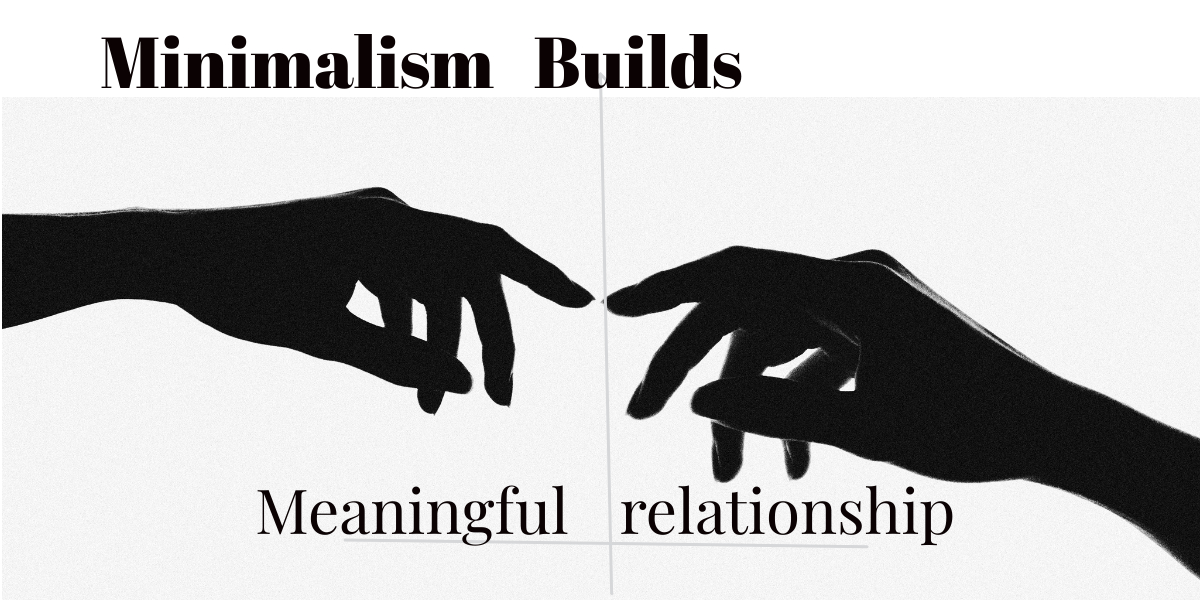
How Minimalism Helped Me Build Meaningful Relationships
When we begin adopting a minimalist approach, our attention naturally shifts toward the things that are unnecessary in our lives. We start removing the clutter that disrupts our mental balance and takes away our peace of mind. The same principle applies to relationships. Many of us continue carrying the weight of relationships that are no longer meaningful or beneficial to our lives.
If I had to summarize it in one sentence, I would say this: we all seek human connections that make us feel genuinely connected, which is why meaningful relationships are so important.
Meaningful Relationships: A Quick Answer
Meaningful relationships are connections built on trust, mutual support, emotional safety, respect, and genuine care. Unlike superficial relationships, meaningful relationships add value to your life, help you grow as a person, and provide support during difficult times. Minimalism can help strengthen meaningful relationships by encouraging people to focus on quality connections rather than maintaining a large number of draining or one-sided relationships.
Before we go further, let’s understand a basic question.
What Are Meaningful Relationships?
Meaningful relationships are connections that add genuine value, trust, support, and emotional connection to your life.
Meaningful relationships can include
- Family members
- Friends
- Romantic partners
- Mentors
- Colleagues
- Neighbors
- Members of a community
We are all ordinary human beings, and it is unrealistic to expect every relationship in our lives to be healthy and fulfilling. I used to believe that I needed to maintain good relationships with everyone because successful people are often described as those with strong social connections.
But I was wrong.
Despite my best efforts, some relationships gradually became a source of stress because I was constantly giving while the other person was only taking—my trust, my time, my money, and my mental peace.
Looking back, I realized that many of these relationships were also consuming one of my most valuable resources—my time. Learning to be intentional about where I invested my energy became an important part of my journey toward time minimalism.
Eventually, I decided to stop investing so much energy into relationships that demanded so much while giving so little in return.
Creating Space for Meaningful Relationships
Making that change was not easy.
When relationships have existed for years, letting go of old patterns can be difficult. In a way, I began doing what companies do during restructuring—I started evaluating my relationships more carefully.
These were the types of relationships I needed to reconsider:
- Relationships that damaged my mental well-being
- People who only stayed around when they needed something
- Relationships built primarily around financial benefit
- People who disappeared during difficult times
This does not mean I completely cut these people out of my life.
Instead, I changed the way I maintained those relationships. I stopped over-giving and began setting healthy boundaries.
Let me share a few experiences that may sound familiar.
1. The Sweet-Talkers
A charming tongue can sometimes be a dangerous weapon.
Throughout my life, I have met people whose words were so pleasant and flattering that it seemed impossible to imagine they could have harmful intentions.
Some common signs include:
- They connect with you for a specific purpose and remain exceptionally kind until that purpose is fulfilled.
- They create problems behind the scenes while speaking so politely that you rarely suspect them.
- Their compliments often appear conveniently when they need something from you.
- Once their goal is achieved, their warmth slowly disappears.
- Recognizing this pattern taught me the difference between genuine kindness and strategic sweetness. One is consistent. The other appears only when it is useful.
2. The “Only When I Need Something” People
This was another category of relationships I gradually distanced myself from.
These people remembered me only when they needed advice, money, emotional intimacy, or someone to listen to their problems. But when I needed support, they were nowhere to be found.
A relationship becomes meaningful only when energy flows both ways.
One-sided giving is never sustainable, no matter how old or familiar the relationship may be.
3. Relationships Built on Comparison and Competition
Some people stay connected because they constantly compare their lives with yours.
They feel comfortable when you are behind them and become insecure when you move ahead. These relationships can be extremely draining because there is little room for genuine happiness and mutual support.
A meaningful relationship celebrates growth instead of competing with it.
4. Guilt-Based Relationships
These are the people who use closeness as a tool for pressure.
You may hear things like:
- “We’ve been friends for years. How can you refuse?”
- “We’re family. You can’t say no.”
- This is often a subtle form of emotional manipulation disguised as care and concern. Because it comes from people close to us, it can be difficult to recognize at first.
What Minimalism Taught Me About Meaningful Relationships
Just as I evaluate every object in my home by asking, “Does this add value to my life?” I started asking the same question about my relationships.
That simple shift taught me three important lessons.
1. Quality Matters More Than Quantity
I did not need fifty acquaintances.
I needed a handful of people who would stand beside me during difficult times.
2. Boundaries Are Not a Lack of Love
I used to think that saying “no” would damage relationships.
Now I understand that healthy boundaries are often what keep relationships healthy and sustainable.
3. Balanced Relationships Last Longer
The healthiest relationships are those where both people invest in the connection.
When only one person carries the entire relationship, imbalance eventually creates resentment and exhaustion.
How to Build Meaningful Relationships
Removing unhealthy relationships is only part of the process. It is equally important to create space for relationships that genuinely enrich your life.
Here are a few practices that helped me:
- Prioritize quality time instead of surface-level interactions.
- Be willing to show vulnerability with people you trust.
- Look for reciprocity where effort flows in both directions.Value consistency and invest in people who remain present during difficult seasons of life.
Key Takeaway
- Meaningful relationships are based on trust, support, respect, and emotional connection.
- Not every relationship deserves equal access to your time and energy.
- Healthy boundaries help protect your mental well-being.
- One-sided relationships often lead to exhaustion and resentment.
- Minimalism encourages quality relationships over a large social circle.
- Consistency and reciprocity are essential for long-term meaningful connections.
- A smaller circle of supportive people can provide more value than dozens of superficial relationships.
Final Thoughts
Minimalism is not limited to decluttering your wardrobe or simplifying your home. It is a mindset that teaches us that “less but better” is often far more valuable than “more but hollow.”
In fact, one of the most overlooked benefits of a minimalist lifestyle is the ability to create space for healthier relationships, deeper conversations, and stronger emotional well-being.
When I applied this philosophy to my relationships, I finally understood what genuine connection feels like.
Today, there are fewer people in my life than before, but the trust, love, and peace I share with those who remain are deeper than ever.
Perhaps that is the true meaning of meaningful relationships—not having the largest circle, but having connections that bring comfort, trust, and a sense of belonging.
Frequently Asked Questions
Why are meaningful relationships important?
Meaningful relationships help reduce feelings of loneliness, provide emotional support during difficult times, improve mental well-being, and create a stronger sense of belonging.
Can minimalism improve relationships?
Yes. Minimalism encourages people to focus on what truly matters. By reducing unnecessary commitments and unhealthy relationships, individuals can invest more time and energy into meaningful relationships.
How do you identify a one-sided relationship?
A one-sided relationship often involves one person doing most of the giving, initiating contact, providing support, or making sacrifices, while receiving very little effort or care in return.
What is the difference between meaningful and superficial relationships?
Meaningful relationships are built on trust, mutual respect, and emotional connection. Superficial relationships usually remain at a surface level and lack deeper support or understanding.
How can I build more meaningful relationships?
You can build meaningful relationships by prioritizing quality time, practicing honest communication, setting healthy boundaries, showing vulnerability, and investing in people who consistently support and value you.