The Quiet Clutter in the House: Why We Keep Bags “Just in Case”
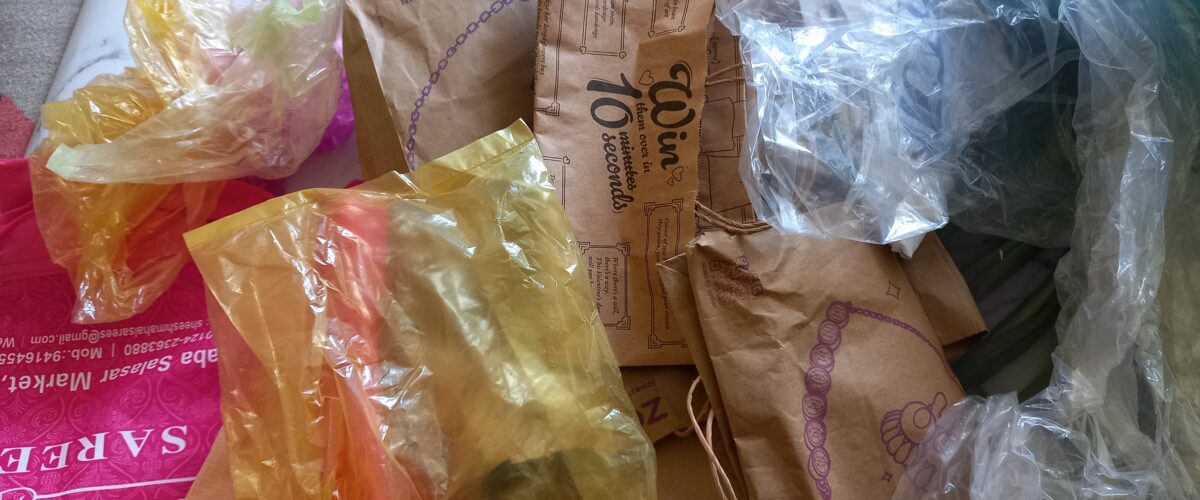
A home becomes beautiful not just because of its colours or design, but also because of its cleanliness. A house filled with unnecessary items often looks no less than a museum. I have often noticed that we collect clutter with the belief that it might be useful in the future. One such highly ignored form of clutter is shopping bags, delivery bags, and plastic vegetable bags.
Before I understood the importance of decluttering and the psychology behind it, I too kept collecting many things. I was afraid that I might need them someday, and because of that fear, removing clutter felt difficult. There is no confusion about the fact that we should keep things—but only according to our needs.
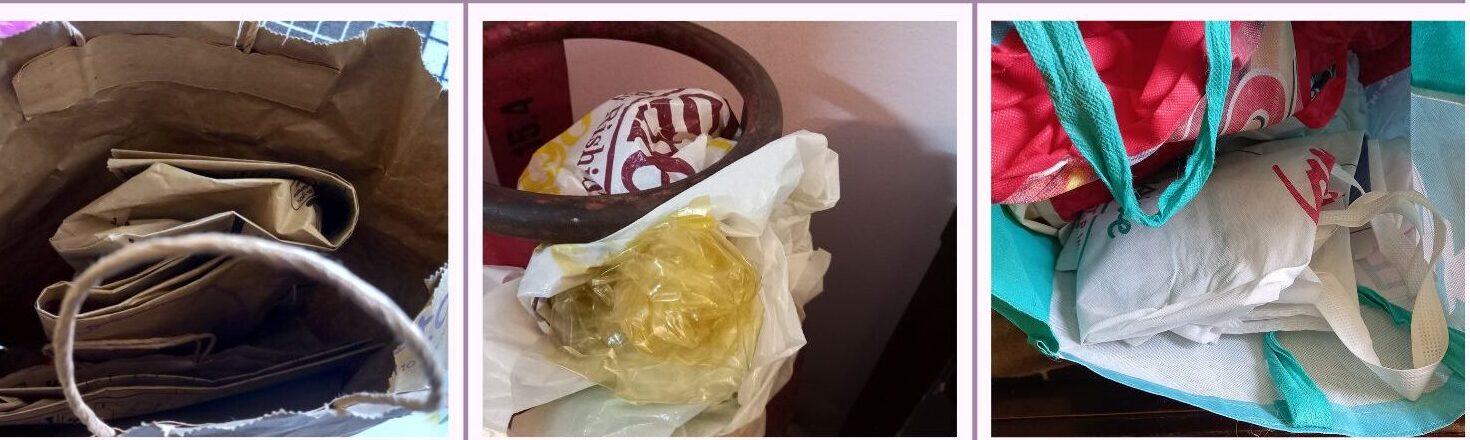 When I started observing my home more closely, I noticed a kind of clutter that was hidden in corners. Vegetable plastic bags stuffed inside one large plastic bag, many small bags pushed into the corner near the gas cylinder. Paper bags inside paper bags, shopping bags piled up inside the cupboard. I kept collecting them thinking they would be useful in the future, even though I knew vegetables come daily, plastic bags keep multiplying, online deliveries arrive frequently, and shopping happens two or three times a month.
This is exactly the kind of hidden clutter that can quietly weigh down not just your space, but your mind. That’s why I wrote how to declutter your home for relaxation — a guide with simple, practical steps to free your living space, reduce daily stress, and create a calmer, more peaceful environment
Still, the fear of shortage—what if I need them someday and don’t have enough—kept me holding on to this clutter. And the most amusing part? Some bags were stored and never used simply because I liked their design. These are the small habits that quietly prevent us from moving away from clutter.
We now understand how clutter accumulates. But now comes a very important question—
What clutter in the house really means
We often read and hear the word ‘clutter,’ but we don’t really understand what it actually means.”
Clutter refers to a collection of things that are unnecessary, unused, or poorly organized, taking up space and creating visual or mental stress.
In simple words:
Clutter is anything you keep “just in case” but rarely or never use.
A very familiar example
Think about old clothes in your cupboard.
Not the ones you wear regularly—but the ones you keep just in case.
A kurta that no longer fits properly, but might someday.
A dress saved for a special occasion that never seems to arrive.
A pair of jeans you hope to fit into again.
You don’t keep these clothes because you need them today.
You keep them because letting go feels uncomfortable.
So they stay—folded neatly, shifted from one shelf to another, and carried along every time you reorganise your cupboard. Over time, your wardrobe starts feeling full, yet choosing what to wear becomes strangely exhausting.
This is often the moment when people realise that the problem isn’t having too few clothes—but having too many that don’t really work for their life anymore.
That’s where a capsule wardrobe can quietly change things. Instead of keeping clothes out of fear, you begin choosing them with intention. When your wardrobe is built around pieces you actually wear and love, you naturally stop buying extras—and many people end up saving nearly 50% on clothing without even trying.
Clutter, in this case, isn’t about clothes.
It’s about holding on to versions of ourselves we no longer live.
Bags: The Hidden Clutter We Ignore
Bags create a kind of clutter that often goes unnoticed. We don’t usually think of them as clutter because we consider them useful items. Unlike clothes, we rarely donate them. Instead, we treat them as part of our daily routine—for example:
- to throw garbage
- to store unused items
- Because of this, they never feel unnecessary.
The real issue isn’t how useful these bags are—it’s about how much we store and how we store them so that they don’t turn into waste or take over our living space.
How Many Bags Should We Keep and How to Store Them
Bags are one of those hidden clutter items that quietly pile up in our homes. The key to keeping them under control is realistic use. Take a moment to observe your own habits—how many bags do you actually reach for in a week? Chances are, you’re keeping far more than you ever use.
For most households, a handful of plastic bags is enough for weekly vegetable shopping and garbage needs. Usually, 5–10 medium-sized bags will do. A few sturdy paper bags—maybe 2 or 3—are plenty for gifting or reuse. And for reusable cloth or shopping bags, 2–3 per person is more than enough. If a bag hasn’t been used in six months, it’s safe to recycle or discard it.
Storing them doesn’t have to be complicated. A small basket or box tucked in a corner can serve as a dedicated home for all your bags. Keep similar types together—plastic bags in one section, paper bags in another. Plastic bags can be rolled into neat little squares, while paper bags can be stacked inside each other.
The trick is to limit the space you allow for them. Decide on a container and once it’s full, don’t add more. This prevents the “just in case” pile from quietly growing into a mess. Torn or unusable bags can be recycled immediately, or reused creatively as garbage liners or for craft projects.
Make it a habit to glance at your bag container once a week. Remove any bags you haven’t used in a while. Over time, you’ll notice that keeping bags organized and under control doesn’t just free up space—it actually makes your home feel lighter and calmer.
Remember, the goal isn’t to throw away every bag you own. It’s about keeping only what you truly need, storing it neatly, and creating limits so clutter doesn’t take over your home or your peace of mind.
Bags don’t need to be thrown away completely, but they shouldn’t take over your home.
By keeping only what’s necessary, folding them neatly, and limiting storage space, you can prevent them from quietly becoming clutter and reclaim both your space and your peace of mind.