Changes I Feel After Adopting a Minimalist Lifestyle
I did not adopt minimalism because it was trendy. To be honest, I did not know much about minimalism at all.There came a time in my life when a financial crisis forced me to take a closer look at how I was living. When money becomes scarce, it is not only your bank balance that changes—your perspective begins to change as well.
I realized that many of the luxuries I once considered necessities were actually just desires. My home was filled with things that I rarely used. Some relationships also revealed their true nature during that difficult period.That phase taught me something important: we spend most of our lives collecting things, but very few people teach us how to identify what truly matters.
That was the beginning of my minimalist journey.
This is not simply a story about owning fewer possessions. It is a story about re-evaluating my priorities, spending habits, relationships, and mindset. In this article, I want to share the changes I experienced after adopting a minimalist lifestyle and how it helped me create a simpler, calmer, and more meaningful life.
WHAT IS A MINIMALIST LIFESTYLE?
Before discussing minimalism, it is important to understand what it truly means. The lifestyle I encourage is often misunderstood because knowledge remains incomplete until it is experienced in real life.
A minimalist lifestyle means living a more meaningful life with fewer things.
It is not simply about decluttering your home or reducing the number of possessions you own. Its real purpose is to remove the things that do not add value to your life so that you can focus on what truly matters—your health, relationships, peace of mind, time, and purpose.
As the popular definition says:
“Minimalism is the intentional choice to own and do less, so you can experience more of what matters.”
When I Started Living a Minimalist Lifestyle
I began living a minimalist lifestyle during one of the most difficult periods of my life.
During that time, I learned the truth about relationships, the reality behind a lifestyle built on appearances, the importance of money, and the uselessness of much of the clutter I had accumulated.
That was when I realized that I did not need a more luxurious lifestyle to live well. What I truly needed was a minimalist lifestyle.
The lessons I learned may connect with your own experiences as well. So let’s talk about the realities of the modern world and how adopting a minimalist lifestyle can help us live a calmer and more peaceful life.
Four Essential Pillars of Life Where Minimalism Matters Most
In my experience, there are four areas of life where minimalism can have the greatest impact:
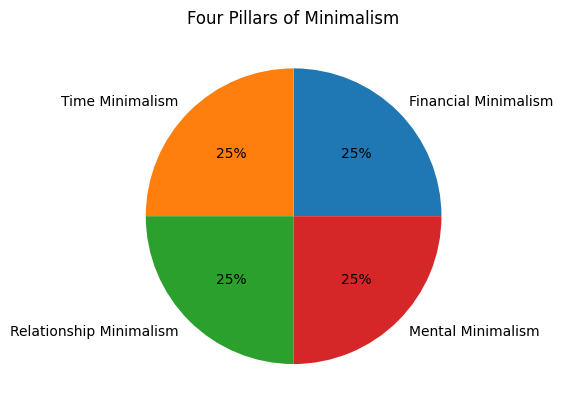 Let me share how I worked on each of these areas and the changes they brought to my life.
Financial Minimalism
At some point in life, most people go through a phase that completely changes them. Something similar happened to me.
A financial crisis transformed my life—or, to put it more positively, it taught me how to live.
As the money in my bank account began to shrink, my luxuries slowly disappeared as well. That was when I realized how often we mistake luxury for necessity.
We want expensive phones, bigger cars, and branded products because they give us a sense of status. But the moment the first EMI payment leaves your account, you realize that you have not just purchased a product—you have committed a portion of your future income toMonth after month, EMIs can reduce financial freedom. They increase pressure to earn more, make it harder to leave work we dislike, and often prevent us from taking meaningful risks.
Eventually, we become less like owners of our possessions and more like people working to support them.The biggest irony is that the luxury we bring home in search of happiness can sometimes become a source of stress, anxiety, and financial pressure.
If you would like to explore minimalism with me, let’s begin with the first pillar: Financial Minimalism.
What Is Financial Minimalism?
Money is incredibly attractive. In many ways, it acts like a magnet. It attracts relationships, status, convenience, and luxury. That is why learning how to manage this area of life wisely is so important.If you ask me what financial minimalism means, I would explain it in very simple words.
Financial minimalism does not mean spending as little money as possible or denying yourself every pleasure.
It means using your money intentionally and thoughtfully so that your life revolves around your values and goals instead of constantly chasing more money.
Today, many of us do not spend because we truly need something. We spend because everyone else seems to be doing it, or because social media has convinced us that a good life requires more possessions.
Financial minimalism encourages me to ask a different question:
“Is this expense adding real value to my life, or is it only giving me a momentary happiness?”
When you start asking yourself this question consistently, your spending habits begin to change.
You stop chasing every trend, sale, and luxury item. Instead, you start directing your money toward things that provide security, freedom, and peace of mind.
How to Maintain Financial Minimalism
Financial minimalism is not a one-time decision. It is a habit that must be practiced regularly.
-
Learn the Difference Between Needs and Wants
Before buying something, ask yourself:
“Do I truly need this?” -
Keep Your Spending Simple
The more things we buy, the more money, attention, and time they require. - Avoid Lifestyle Inflation
As income increases, many people automatically increase their spending. Financial minimalism reminds us that not every extra rupee needs to be spent. - Prioritize Saving and Investing
Pay yourself first.
The money you save and invest today can create more freedom tomorrow. - Avoid Comparison
Financial decisions based on other people’s lifestyles often take us further away from our own goals.
My Core Belief
My understanding of financial minimalism is very simple:
The goal is not to buy less. The goal is to buy only as much as truly improves your life.
When you start using money according to your values, it is no longer just something to spend. It becomes a tool that helps you build a life with less stress, fewer burdens, and more freedom.
Working on financial minimalism was not just a way for me to save money. It was a way to understand my priorities and free my life from unnecessary pressure. Even today, before making any financial decision, I ask myself the same question—does this add real value to my life, or is it only giving temporary satisfaction?
But minimalism is not limited to money alone.
In my minimalist journey, I learned that if we simplify only our finances but keep our time, relationships, and thoughts cluttered, it becomes difficult to experience true peace in life.
That is why I see minimalism in four pillars:
• Financial Minimalism – Using money wisely and intentionally
• Time Minimalism – Spending time only on what truly matters
• Relationship Minimalism – Choosing relationships that bring positivity and support
• Mental Minimalism – Protecting yourself from unnecessary thoughts, comparison, and information overload
In this article, we discussed Financial Minimalism. If you want to make your life simpler, calmer, and more meaningful, I invite you to continue this journey with me.
You can also read about:
Sometimes, to improve life, we do not need more things. We only need to understand how to create space for what truly matters.
FAQ
Why are more people turning to minimalism today?
Many people feel overwhelmed by consumerism, information overload, financial stress, and busy schedules. Minimalism offers a way to simplify life and focus on what matters most.
Can minimalism reduce anxiety and stress?
For many people, yes. Owning fewer unnecessary possessions, having fewer financial obligations, and reducing mental clutter can create a greater sense of control and peace.
What is the biggest misconception about minimalism?
The biggest misconception is that minimalism is about owning almost nothing. In reality, minimalism is about making room for what matters by removing what doesn’t.
How do I know if I need minimalism?
You may benefit from minimalism if you often feel overwhelmed by clutter, struggle with impulse spending, constantly compare yourself to others, or feel like your life has become unnecessarily complicated.
Can minimalism help with debt?
Many people use minimalist principles to pay off debt because they become more aware of their spending habits and learn to prioritize needs over wants.